


(Vintage Chanel Tweed Suit)
I’ve gotten so many inquires and emails about vintage clothing and how to tell if it is indeed vintage. I have also been asked many times what is the difference between vintage and antique? So I figured I would do some research and share with you my findings:)
If an article of clothing is 75 years or older, it’s considered antique. Clothing that is categorized as vintage is usually about 25 years or older. Since vintage clothing has been so popular, most designers and modern clothes have since borrowed ideas and trends from the past making it very difficult for a normal person to identify it’s history and age. I find it interesting that the word vintage is thrown around so much these days without people truly knowing the age of the item. (I’m guilty of this as well.)
Here are some tips on how to determine a garment’s vintage status:
1. Size. According to my research, sizing has changed dramatically over the years. Numerical sizing is much different than modern sizing. For example, a size 12 in the 1950’s, a size 8 in the 1970’s and a size 4 in 2010 may all have similar proportions. Can we say vanity sizing? No wonder why most 00’s or 0’s aren’t TTS.
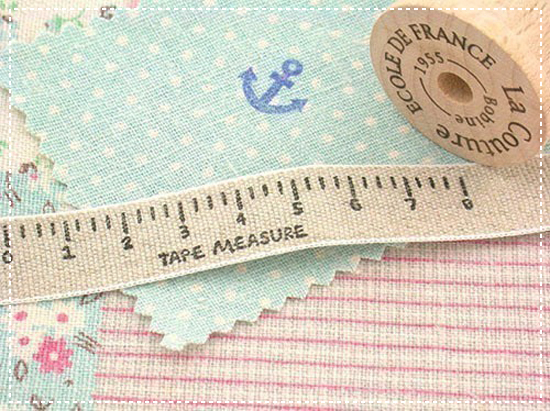
2. Care Labels. Look closely and carefully for care labels. Makes sure to turn the garment inside out and look in all areas for labels. If the care label is not present doesn’t mean that it’s automatically vintage because it could have been removed by the previous owner. If you see care symbols, the garment may date back to 1971 or later.
3. Cut. Throughout the decades, hemlines and sleeves have changed dramatically. It wasn’t until about the 1960’s that hemlines rised above the knee. Between the 1950s and 1970’s, armholes were very small and narrow (I wish this were the case today). Dresses in the 1940’s and 1950’s, the waist measurements were significantly smaller than the hip and bust area.
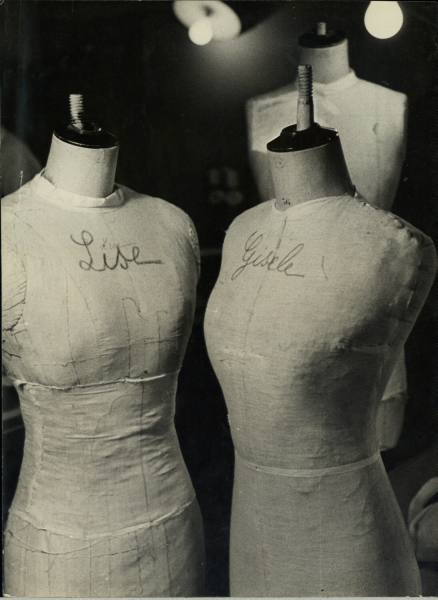
4. Zipper. Closely examine the zipper placement on the garment. Zipper locations have changed throughout the decades (as many other things). A zipper starting under the sleeve and ending at the waist or the hem indicates the dress was made anywhere from the 1930’s to the 1960’s. A zipper in the center of the back of the dress indicates the garment dates to the late 1950’s or later. Interesting fact: before the late 1930’s, women’s dresses were fastened with buttons, ties or clasps. How cool is that?
I am sure there are many other tips but these are the main ones I found while doing my research online. If you received the item as a hand-me down or passed down from generation to generation, be sure to ask when the garment was worn or purchased. Look in family photos to see if you can determine the decade or origin. I hope you found this somewhat useful!
Readers- do you have any vintage or antique garments?




Interesting! Great info. I have a vintage DVF wrap dress, early 70's I think.
Thank you for this! And just to clarify – even if an item matches all of the above criteria, it doesn't mean that it's vintage unless you're absolutely SURE it is (as in, have solid evidence). For instance, I have seen plenty of dresses with zippers under the sleeve to the waist, but I know that the brand is from modern day. and etc etc. Thanks again for this informative post, Annie!
I think zippers say a lot. Plastic zippers are more modern than metal ones. I don't think invisible zippers were invented until the 80s and didn't really come into common use until the 90s.
my mom's skirts from the 80s still have the old style zippers with the cloth covering the zipper part.
this is a really useful guide! thanks annie 🙂 i have no experience shopping for vintage clothing but wow .. modern sizes are so inflated compared to back then xD we had way more petites back then haha !
Great information! I wear a lot of vintage, mainly tailored jackets and coats. I recently found the most amazing dress which needs to be altered but normally vintage items are very petite friendly. I adore my vintage pieces because they are usually made in quality fabrics and the fit is so much better especially in the sleeves.
I have a wool knit suit from the 60's, I believe. It is a jacket and skirt suit, cut similar to the Chanel suit above (similar trim). It's a camel color with black trim, with 3/4 length sleeves. It was my grandmother's suit and I found it in her closet after she passed away about 12 years ago. She was not petite (5' 5") so I did have it taken in a little bit. I would not part with it for anything.
This is a great and useful post.
I have a vintage Hermes purse that I adore because it is no longer produced.
As for Chanel suits and other 80s garments, I just wanted to mention the shoulder pads. As for Chanel suits, you can take it into one of the Chanel boutiques with RTW to have the seamstress there alter it for you. Price may be higher than your tailor but at Chanel you can update the zipper or buttons too. 🙂
Thanks for the informative post! I definitely own a few vintage items here and there but I'm doubtful that anything in my closet is antique. I own a 28 year old Louis Vuitton Keepall and I'm pretty impressed by the age and sturdiness of it. When I first got it, I thought it was only about 10-15 years old. It's a good thing LV has date codes on their products so people know it's exact age. I also own a handful of vintage pencil skirts. I have a skirt that is a size 10 and one that's a bit big on me that's a size 12 but I'm actually about a size 2 for today's dress size, so I think that's a clear indication that they're from the 70s-80s.
I also feel that there's a difference in fabrics and stitching for older items. I think that there's more care put into stitching and there are less loosening threads for older items.
Yes, I just got a Victorian looking lace blouse today, it has a separate top underneath it. No labels…very curious to know how old it is, and what style exactly.
naturally like your website but you need to test the spelling on quite a few of your
posts. A number of them are rife with spelling issues and I find
it very troublesome to inform the reality however I’ll definitely come
again again.
Spot on with this write-up, I truly believe this website needs far more attention. I’ll
probably be returning to read more, thanks for
the information!
Does your blog have a contact page? I’m having a tough time locating it but,
I’d like to shoot you an e-mail. I’ve got some recommendations for your
blog you might be interested in hearing. Either way, great
site and I look forward to seeing it develop
over time.
This is very interesting, You’re a very skilled blogger.
I have joined your rss feed and look forward to seeking
more of your magnificent post. Also, I’ve shared your web
site in my social networks!
When some one searches for his necessary thing, thus he/she wishes to be available that in detail,
so that thing is maintained over here.
Hi there, I found your site by way of Google while searching
for a comparable matter, your website got here up, it seems great.
I’ve bookmarked it in my google bookmarks.
Hi there, simply was aware of your weblog through Google, and found that it
is truly informative. I am gonna be careful for brussels.
I’ll be grateful when you proceed this in future. Many other folks shall be benefited out of your writing.
Cheers!
Thanks for finally writing about >How To: Identify and Date Vintage Clothing |
Stylish Petite <Loved it!
My coder is trying to persuade me to move to .net from PHP.
I have always disliked the idea because of the costs.
But he’s tryiong none the less. I’ve been using Movable-type
on a variety of websites for about a year and am concerned about switching to another platform.
I have heard excellent things about blogengine.net.
Is there a way I can transfer all my wordpress posts into it?
Any help would be greatly appreciated!
I do not knhow if it’s jst me or if perhaps everyone elwe experiencing
problems with your blog. It appears lie some oof the text in your posts are running
off the screen. Can somebody elwe pkease comment and let me know if thks is happening to
them as well? This might be a issue with my web
browser because I’ve had this happen previously. Many thanks